Cataracts are among the most common age-related eye conditions and a leading cause of blindness worldwide. In fact, their global impact is so significant that a dedicated Cataract Awareness Month is observed each year in June to raise awareness, promote early detection and encourage timely cataract treatment. Whether you are experiencing changes in your eyesight or simply want to learn more about eye cataracts, this guide covers everything from cataract causes and symptoms to cataract surgery and prevention.
What are cataracts?
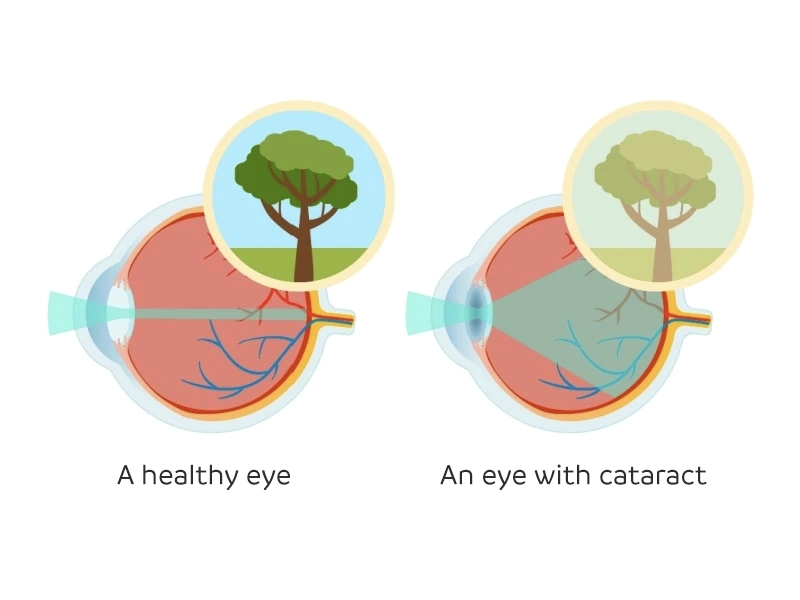
Cataracts are an eye condition in which the eye’s normally clear lens becomes cloudy due to the gradual breakdown and clumping of proteins. As the lens becomes less transparent, it scatters and reduces the amount of light passing through, leading to blurred vision and glare.
Cataracts usually develop slowly over time and may take years before they noticeably affect eyesight. However, the progression varies from person to person. Some individuals may experience only mild visual changes, while others may eventually require cataract surgery to restore clear vision.
Types of cataracts
There are different types of cataracts, depending on where they form within the lens, including:
1. Nuclear cataracts
This type affects the centre of the lens. As a nuclear cataract develops, some people experience short-term improvement in reading vision, before eyesight worsens again.
2. Cortical cataracts
Cortical cataracts begin as white streaks or wedge-shaped lines around the outer edge of the lens. As cataracts develop, they progress towards the centre, interfering with the passage of light and reducing visual clarity.
3. Posterior subcapsular cataracts
This type develops near the back of the lens and can progress more quickly than other types. It often causes glare, halos around lights and difficulty reading, especially in bright conditions.
4. Congenital cataracts
Some individuals are born with cataracts or develop them during childhood and this type is referred to as congenital cataracts. They are primarily caused by genetic conditions or infections during pregnancy, such as rubella or chickenpox.
Cataract symptoms
Common cataract symptoms include:
- Blurry vision: One of the most common signs of cataracts is cloudy or blurry vision. Many patients describe it as looking through a misted window or dirty windscreen.
- Sensitivity to light: Glare and halos around lights are also common signs of cataracts, making bright sunlight, headlights or indoor lighting feel uncomfortable.
- Difficulty seeing at night: Cataracts can make it difficult to see in low-light environments, especially while driving.
- Colour vision deficiency: Colours may appear faded and dull, with a noticeable yellow tint, making it harder to distinguish between different colours, specifically shades of blue and purple.
- Double vision: Some people may experience double vision in one eye as the cataract develops.
What causes cataracts?
The most common cause of cataracts is the natural ageing process. As we age, the proteins within the eye’s lens gradually break down and clump together, leading to cloudiness. However, several other factors can also increase the risk of developing cataracts:
- Genetics – A family history of cataracts may increase your likelihood of developing them.
- UV exposure – Long-term exposure to UVA and UVB rays can contribute to cataract formation.
- Medical conditions – Diabetes and previous eye injuries can increase the risk.
- Certain medications – Long-term steroid use has been linked to cataract development.
- Smoking and alcohol – Lifestyle habits can also contribute to the formation and progression of cataracts.
Diagnosis, surgery and recovery
Since cataract symptoms can develop slowly and may not be immediately noticeable, regular eye tests play an important role in diagnosis by monitoring the progression and determining when cataract treatment may be needed. During an eye examination, an optometrist assesses your vision and examines the lens of your eye using specialised equipment.
In the early stages, prescription glasses, contact lenses and improved lighting may temporarily help manage symptoms. However, cataract surgery remains the only effective long-term cataract treatment. This surgery is usually safe and takes between 15 and 30 minutes to remove and replace the cloudy natural lens with a clear artificial intraocular lens (IOL). The procedure is typically carried out as day surgery under local anaesthetic, allowing most people to return home the same day.
After cataract surgery, many people notice improved vision within a few days. However, full recovery can take several weeks, varying from individual to individual. Following a cataract operation, patients are generally advised to:
- Avoid rubbing the eyes.
- Use prescribed eye drops as directed.
- Avoid heavy lifting and strenuous activity for some time.
- Wear 100% UV-protective sunglasses outdoors to protect against bright light.
Frequently asked questions
1. How are eye cataracts treated?
The most effective cataract treatment is surgery. During the procedure, the cloudy lens is removed and replaced with an artificial lens to restore clear vision.
2. How successful is cataract surgery?
Cataract surgery is considered highly safe and effective, with most people experiencing significant improvements in vision following the procedure.
3. Can cataracts be prevented?
As ageing cannot be avoided, neither can cataracts be prevented. However, healthy lifestyle habits, UV protection and regular eye tests may help lower the risk of developing cataracts.
4. When should you see an optician?
If you notice cloudy vision, glare, difficulty seeing at night or other signs of cataracts that affect your daily activities, it is recommended to book an eye examination promptly.
Disclaimer: The advice in this article is for informational purposes only and does not replace medical care or an in-person check-up. Please check with an eye care professional before purchasing any products or remedies. For information on our article review process, please refer to our Editorial Policy.

 Need Optical Advice?





 Offers
 Account
 Menu
Menu Favorite
 Basket

 Offers




 Copy Link